
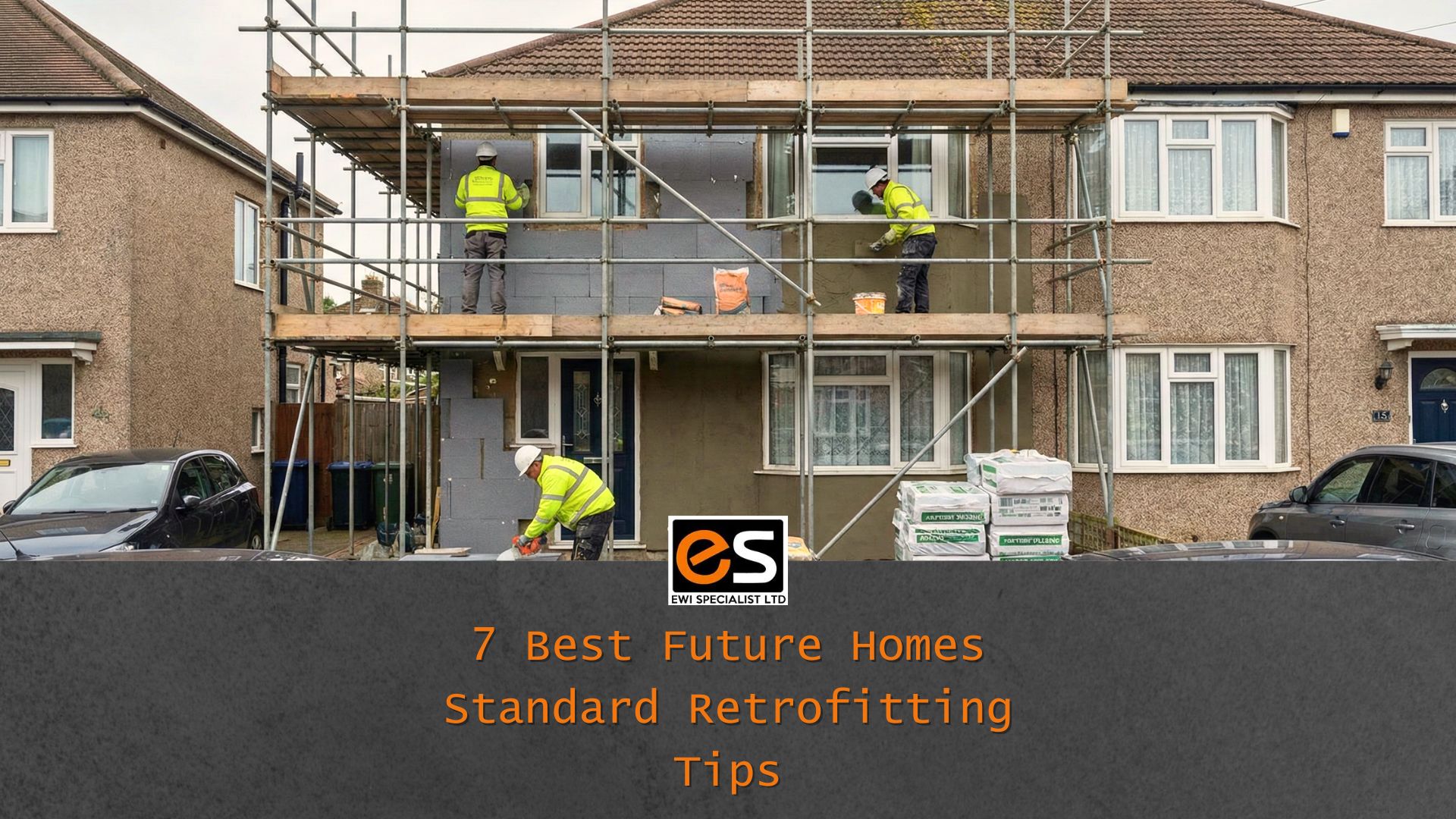
7 Best Future Homes Standard Retrofitting Tips are now the definitive roadmap for UK homeowners looking to eliminate high energy bills and future-proof their property value. With the full implementation of the Future Homes and Buildings Standard (FHS) active as of early 2026, the focus has shifted toward the monumental challenge of bringing the existing 28 million homes into alignment with these rigorous energy-efficiency benchmarks. At EWI Specialist, we ensure that your property becomes “zero-carbon ready” by delivering mandatory, high-performance interventions designed to meet the nation’s 2050 net-zero targets.
Content Page
- Transitioning from SAP to the Home Energy Model (HEM)
- Implementing a “Fabric-First” Thermal Jacket
- Meeting the 0.18 W/m²K Wall U-Value Target
- Integrating Low-Carbon Heating Systems
- Maximising Energy Independence with Solar PV
- Accessing the £15 Billion Warm Homes Plan
- Ensuring Mandatory PAS 2030 Compliance
7 Best Future Homes Standard Retrofitting Tips
1. Transitioning from SAP to the Home Energy Model (HEM)
As of 2026, the industry has officially moved away from SAP calculations to the Home Energy Model (HEM). This new engine utilises half-hourly simulations to track real-world performance, moving away from theoretical estimates toward a verified energy balance. This ensures that the retrofitting steps we take today provide measurable results in your home’s daily climate.
2. Implementing a “Fabric-First” Thermal Jacket
The “fabric-first” approach is the governing philosophy of the 2026 retrofit sector. This strategy dictates that the energy demand of a building must be minimised through superior insulation and airtightness before considering the installation of low-carbon heating systems.
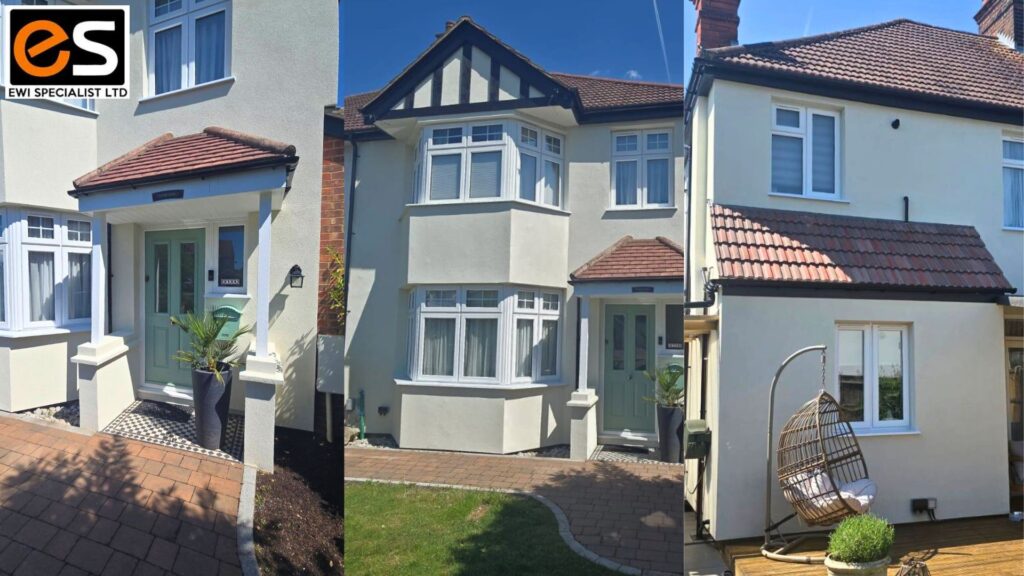
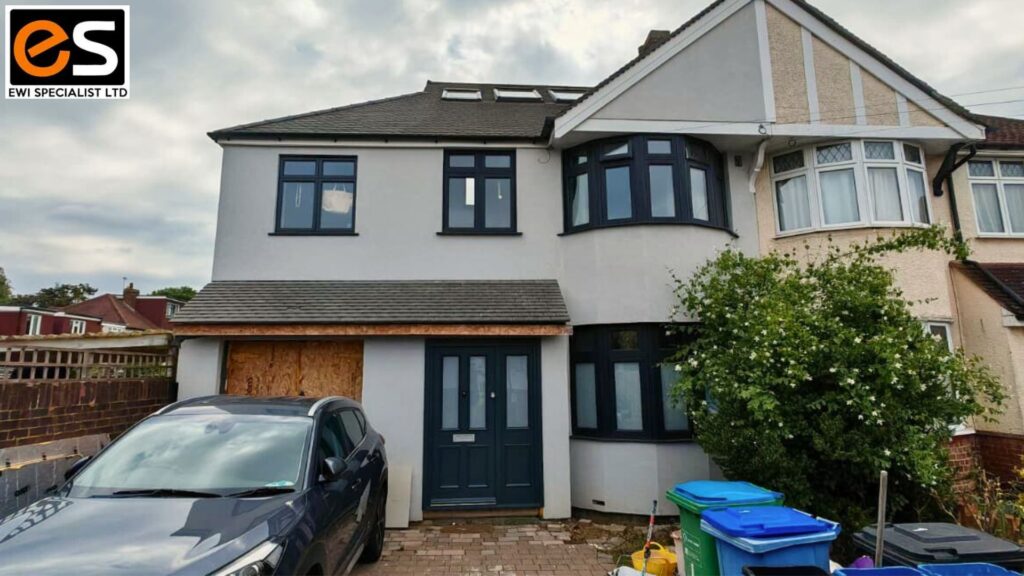
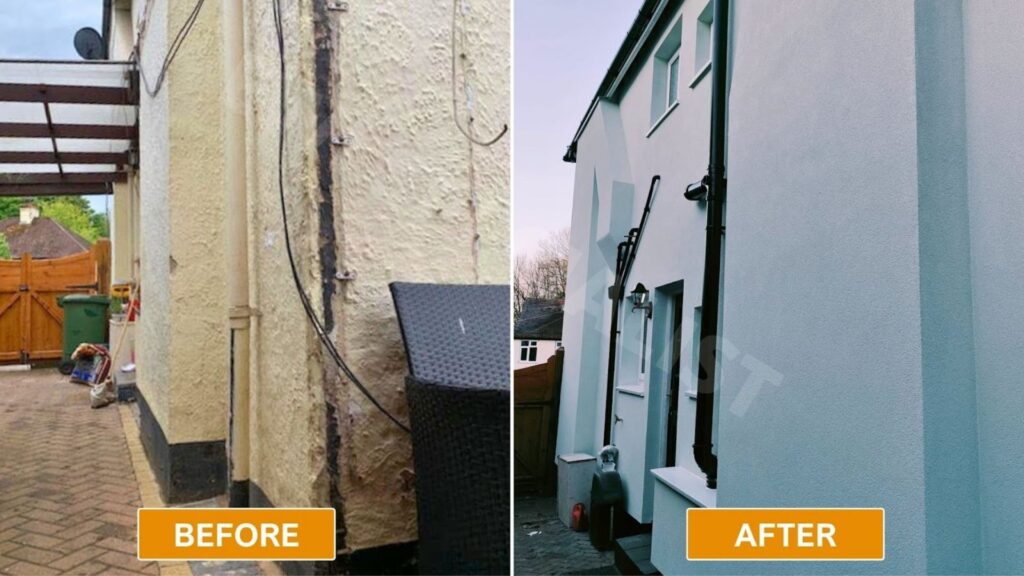
External Wall Insulation (EWI) acts as a thermal jacket, wrapping the entire property in a continuous layer of insulation. By placing the insulation on the outside, the original masonry is kept on the “warm side” of the thermal barrier, allowing walls to act as a heat storage medium.
3. Meeting the 0.18 W/m²K Wall U-Value Target
To achieve the 75-80% reduction in carbon emissions required by the 2026 standard, building fabric must meet significantly enhanced U-values.
| Building Element | FHS Notional Target | Existing Dwelling Limit |
| External Walls | $0.18\ W/m^{2}K$ | $0.30\ W/m^{2}K$ |
| Windows | $1.2\ W/m^{2}K$ | $1.4\ W/m^{2}K$ |
| Doors | $1.0\ W/m^{2}K$ | $1.4\ W/m^{2}K$ |
Achieving the $0.18$ target typically requires $100mm$ to $150mm$ of high-performance insulation, such as Mineral Wool or EPS, applied by a specialist.
4. Integrating Low-Carbon Heating Systems
Under 2026 standards, gas boilers are effectively discouraged for retrofits seeking high EPC ratings. The goal is a shift toward electric-based heating, primarily Air Source Heat Pumps (ASHPs), which deliver 300-400% efficiency. However, these systems operate at lower flow temperatures, necessitating the “fabric-first” foundation provided by EWI to maintain internal comfort.
5. Maximising Energy Independence with Solar PV
As of June 2025, solar PV has become a functional requirement for complying with modern energy standards. Integrating solar panels with battery storage allows homeowners to store excess energy, significantly reducing reliance on the grid and lowering annual electricity costs by an estimated £850 for detached homes.
6. Accessing the £15 Billion Warm Homes Plan
Financial support is the engine of the 2026 retrofit boom. The UK government has consolidated multiple funding streams into the Warm Homes Plan, allocating £15 billion over five years to upgrade 5 million homes.
| Technology | Estimated Cost | 2026 Government Support |
| Solid Wall EWI | £10,000 – £15,000 | Covered under ECO4 and Warm Homes grants |
| ASHP | £8,000 – £12,000 | £7,500 Boiler Upgrade Scheme grant |
7. Ensuring Mandatory PAS 2030 Compliance
Since March 2025, compliance with PAS 2030:2023 has been mandatory for all government-funded retrofit activity. This standard mandates a “whole-dwelling” assessment led by a qualified Retrofit Coordinator.
EWI Specialist is a TrustMark-registered company and PAS 2030-certified installer, ensuring that your project adheres to the rigorous quality and moisture-control standards required in 2026.
Ready to Future-Proof Your Home?
Take the First Step Toward a Zero-Carbon Home Today
Applying these 7 best future homes standard retrofitting tips is the most effective way to shield your property from rising energy costs and strict new building regulations.
Installing External Wall Insulation (EWI) isn’t just a renovation; it’s a total performance upgrade that makes your home “Zero-Carbon Ready.” At EWI Specialist, we provide the certified, PAS 2030-compliant expertise you need to hit the 2026 benchmarks with total peace of mind.
Don’t let your property fall behind the standard.
Get Your Free, No-Obligation Retrofit Quote – Let our experts design your EWI system.
Use Our EWI Cost Calculator – Get an instant estimate per m² for your project.
Don’t wait for energy prices to rise or regulations to tighten further. Get a head start on the 2026 standards today.